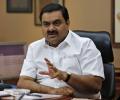
Weeks after confusion over three Mauritius-based funds whipsawing shares of Adani group firms, billionaire Gautam Adani on Monday said that "twisted narrative" seems to imply that companies have regulatory powers over their shareholders and can compel disclosures. Shares of port-to-energy group nosedived last month after reports that accounts of three of the six Mauritius-based funds that have invested most of their money in Adani group firms had been frozen by the national share depository. The three funds owned about $6 billion of shares across the conglomerate.

Gautam Adani was the world's third and Asia's richest man a month back but a damning report by a US firm triggered a massive sell-off in shares of his apples-to-airport group, plunging his own wealth by $80 billion and the tycoon slipping to No.30 on the world billionaire index. Adani's sprawling conglomerate, which spans from sea ports to airports, edible oil and commodities, energy, cement and data centres, is under attack by US short-seller Hindenburg Research, which successfully deflated electric-vehicle maker Nikola Motors in 2020. Hindenburg, which held short positions in unidentified shares of Adani Group firms through its US-traded debt and offshore derivatives, on January 24 accused the conglomerate of "brazen stock manipulation and accounting fraud" and using a number of offshore shell companies to inflate stock prices.
Markets regulator Sebi and the Directorate of Revenue Intelligence (DRI) are probing some Adani Group companies for alleged non-compliance with rules, the government told Lok Sabha on Monday. Minister of State for Finance Pankaj Chaudhary in a written reply to a question said accounts of three of the six Mauritius-based funds, that have invested most of their money in Adani Group firms, were frozen in 2016 over the issuance of Global Depository Receipt (GDR) by certain listed firms. No freeze was ordered for their holding in other firms.
With most Adani Group shares locked in lower-circuit in early morning trade based on news that accounts of three foreign portfolio investors, heavily invested into group companies, were frozen by the National Security Depository Limited, market experts advise caution that investors should not jump in now to buy at lower levels.
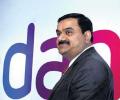
Given the hydrogen connection, it's ironic that Hindenburg Research released a long report, accusing the Adani group of financial manipulation, observes Devangshu Datta.
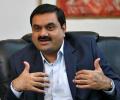
Adani group plans to invest about Rs 1.3 lakh crore across its portfolio companies this fiscal as it doubles down on its $100 billion investment guidance over the next 7-10 years to grow businesses, group CFO said on Tuesday. The investment across portfolio companies that range from ports to energy, airports, commodities, cement and media will be 70 per cent met through internal cash generation and the remaining through debt, Group CFO Jugeshinder 'Robbie' Singh told reporters in Ahmedabad.

Russian oil giant PJSC Rosneft Oil Company is in early talks with Reliance Industries for sale of its 49.13 per cent stake in Nayara Energy, which operates a 20-million tonnes-a-year oil refinery and 6,750 petrol pumps in India, sources said. Reliance has held preliminary talks for acquisition of Nayara, which will help it overtake state-owned Indian Oil Corporation (IOC) to become India's No.1 oil refiner as well as give a meaningful presence in the fuel marketing space.

The government has slashed by up to 20 per cent the supplies of cheaper domestically produced natural gas to city retailers -- a move that may result in Rs 4-6 per kg hike in the price of CNG sold to automobiles, unless excise duty on the fuel is cut, sources said. Natural gas pumped from below the ground and from under the seabed from sites ranging from the Arabian Sea to Bay of Bengal within India is the raw material that is turned into CNG for sale to automobiles and piped cooking gas to households.

Adani group opened a $1.2 billion copper plant, bought a port in Odisha, raised stakes in a cement company and stitched an alliance with rival Mukesh Ambani's Reliance Industries, all in a matter of one week in signs that the apples-to-airport conglomerate has shrugged off the Hindenburg effect and is back to rapid expansion spree. In the last one week, Adani group has through regulatory filings and press statements announced expansions and investments in its mainstay ports business, diversification into metal refining, fund infusion into a two-year-old cement foray and continuing progress in the commissioning of its mega solar project.
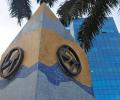
The exit of Larsen & Toubro (L&T) from the Hyderabad Metro is a long-term positive for the stock. It could be a bullish trigger, alongside higher international orders, and new opportunities in segments like defence and data centres.

Over 87 per cent of active large-cap schemes failed to outperform the benchmark S&P BSE 100 (total return) in the 2022 calendar year (CY), significantly higher than the 2021 figure of 50 per cent, shows a report by S&P Dow Jones Indices. During the three-year period (CY 2020, '21, '22), the percentage of schemes underperforming the index was even higher at 97 per cent. While active large-cap schemes generally find it tough to outperform due to a rising efficiency in the market, 2022 proved to be even more challenging as mid-cap and small-cap stocks (where they have some allocation) performed poorly vis-a-vis the large-caps.

Two Adani group companies -- Adani Enterprises and Adani Transmission -- have uprooted the traditional leader Reliance Industries in annual wealth creation in 2022 so far, while the top 100 of them created a massive Rs 92.2 lakh crore of wealth, according to a report. However, Reliance Industries has smashed all records to emerge as the largest wealth creator during the five-year period ending March 2022, says the leading brokerage Motilal Oswal in its 27th annual wealth creation study. The Gautam Adani group companies have been rallying to dizzying heights in the year as the group snapped up many assets and diversified into newer areas.

Corporate India is embarking on an ambitious investment drive, with capital expenditure (capex) expected to double to $850 billion over the next five years, according to a report by S&P Global Ratings. Indian power & transmission, airlines, and green hydrogen sectors would spearhead the spending, the report said.

Over half, or 269 NSE 500 stocks, have given over 10-fold (10x) returns in the last two decades, finds a recent report by Goldman Sachs that analysed 10 major markets across emerging and developed markets (EM/DM) that covered 6,700 stocks. The report examined '10-baggers' - stocks that have generated at least 10x total returns within a rolling 5-year period over the past two decades. Some of the prominent ones that comprise these 269 stocks in the Indian context stocks that delivered over 10x total returns over a 5-year rolling period since 2000 as per Goldman Sachs includes Westlife Foodworld, Bharti Airtel, Adani Total Gas, Patanjali Foods, Larsen & Toubro, BEML, Blue Star, Shree Cement, Lupin, Godrej Industries, Astral, Adani Enterprises, Hindustan Petroleum and Deepak Fertilisers.
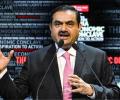
Gautambhai has shown that he has ability to withstand payment delays or vexatious court cases. That is where he is on a more comfortable wicket than many others. A revealing excerpt from R N Bhaskar's Gautam Adani: Reimagining Business in India and the World.

CreditSights has dialed back on its language on debt levels at richest Indian Gautam Adani's group but has maintained that the group's leverage is elevated. In a new note published after discussions with the group's management, CreditSights, a Fitch group firm, said it "has discovered calculation errors" in its recent debt report on two Adani Group companies but these did not change its investment recommendations. On August 23, CreditSights stated that the Adani group was "deeply over-leveraged" and may "in the worst-case scenario" spiral into a debt trap and possibly a default.
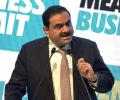
Richest Indian Gautam Adani's conglomerate has cited an improved net debt to operating profit ratio and more than halving of loans from public sector banks to allay concerns about it being overleveraged. In a 15-page note in response to CreditSights report calling the group overleveraged, it said companies in the group have consistently de-levered, with the net debt to Ebitda ratio declining to 3.2 times from 7.6 times in the last nine years. "The businesses operate on a simple yet robust and repeatable business model focused on development and origination, operations and management and capital management plan," the note, reviewed by PTI, said.
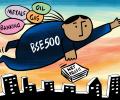
The biggest jump in earnings and decline in P/E multiples has occurred with top companies in metals and mining, corporate banking, and the oil and gas sectors.

'Sweden removed the inheritance tax because many of the rich were fleeing. For example, the owner of IKEA had migrated out of Sweden'

Oil-to-telecom conglomerate Reliance Industries (RIL) has emerged as the country's largest wealth creator, adding a staggering Rs 9.6 trillion over the past five years, according to Motilal Oswal's 26th Annual Wealth Creation Study. In doing so, the Mukesh Ambani-led company has beaten its own record of Rs 5.6 trillion generated in 2014-19. The study covered financial year 2015-16 (FY16) to FY21 and ranks the top 100 companies in descending order of absolute wealth created, subject to the company's stock price outperforming the BSE Sensex. The firms were also ranked according to speed (price CAGR during the period).

Earnings growth, attractive valuations and change in FPI flows from negative to positive over the next 12 months are some of the key triggers for an upside. "A poor monsoon, high inflation and further rate hike are some of the key risks

Corporate India's struggle with subdued revenue and earnings growth persisted in the October-December quarter of 2024-25 (Q3FY25). The combined net sales (gross interest earnings for lenders) of listed companies grew in single digits for the seventh consecutive quarter, while their combined net profit rose by a single digit for the third straight quarter.

In our mystery the watchdog agencies are silent, but it is the market that has barked and has not stopped barking. Till such time as it continues to do so, this headache will not go away, notes Aakar Patel.
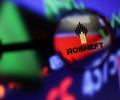
Russia's state-owned oil firm Rosneft has agreed to supply up to 500,000 barrels per day (bpd) of crude oil to Indian upstream oil and gas major Reliance Industries (RIL) in the largest-ever energy deal between the two countries, Reuters reported on Thursday. The 10-year agreement amounts to 0.5 per cent of global oil supply and is valued at roughly $13 billion per year at current prices, it said.

'That is the one headline the world is reading about India this week, and it is a potentially damaging story...' 'I don't think a panic mentality has set in, but this story is one that investors and market watchers are absolutely seized with.'

Energy supermajor Exxon Mobil Corp is in talks to buy a stake in producing oil and gas fields in India, Oil Minister Dharmendra Pradhan said on Wednesday showcasing efforts to raise domestic output to cut imports. Exxon Mobil had in October last year signed a memorandum of understanding (MoU) with state-owned Oil and Natural Gas Corporation (ONGC) to offer its expertise and technology for developing resources in offshore blocks.
Unlike RIL, the Adani group has not yet brought in any big stakeholders to refinance debt or expand.
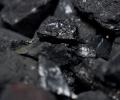
The Adani group struck first coal from its Carmichael, Australia project on Thursday and will start shipping to its customers according to schedule. With this, the project will not only lift the economic prospects of the hitherto barren Australian outback, but also help Indian power plants to source cheap coal. The project had faced protests from a section of population with several banks even refusing to fund it. The group, however, went ahead with the project which included construction of a brand new railway line connecting an Australian port to the mine -- situated 300 kilometers away in Queensland.
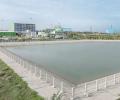
The group will be in a better position to now scale up most of its segments irrespective of government policy, but the bad news others add is its growing debt.

From the 30 Sensex firms, Larsen & Toubro, Reliance Industries, Axis Bank, Asian Paints, Tata Motors, Bajaj Finance, Maruti, Bajaj Finserv, Kotak Mahindra Bank, Titan, Adani Ports and HDFC Bank were the major laggards. JSW Steel emerged as the only gainer.

Billionaire Gautam Adani-led Adani Group on Monday announced a Rs 20,000-crore investment for expanding the capacity of its Gujarat ports to 100 million tons per annum by 2020.

Thirteen companies have joined the Rs 1-trillion-plus market capitalisation club this year, so far. This even as the benchmark Sensex has gained less than 3 per cent on a year-to-date basis, underscoring the bullish undercurrent in the broader market. The trend shows a harsh second wave of Covid-19, subsequent lockdowns, and hit to the economic activity has made little dent into India Inc or shareholders' wealth. At the start of the year, there were 29 companies with a market value of more than Rs 1 trillion.
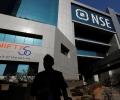
More than 90 per cent stocks in the NSE 500 universe are currently trading above their 200-day moving average (DMA). Experts say this is a sign that the market has become overheated and can lead to a correction or sideways movement for a long period. The 200-DMA is a key technical indicator used by traders to get a sense of market direction. A level, which is roughly a 40-week average, often acts as key support or resistance.
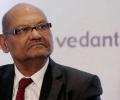
Mining magnate Anil Agarwal's conglomerate on Friday announced a major business shake-up, with flagship Vedanta Ltd approving a spin-off of its metals, power, aluminium and oil and gas businesses into separate listed entities and an overhaul of lucrative zinc unit planned as part of value creation and reducing debt load. Vedanta will issue one share of the five demerged businesses for every share held in the company, the firm said in a statement. The entire exercise, which would require shareholder and lender approval as well as a nod from the stock exchanges and courts, is expected to be completed in 12-15 months, its president for finance Ajay Agarwal said.

With projects worth Rs 1,28,000-cr, the group hopes to become one of the country's biggest industrial houses.

A total of 11 international banks have publicly distanced themselves from the project.

The growth was led by family-owned companies and business groups with presence in pharmaceuticals, information technology services, and consumer products.
Reason behind for the change in his stance: gas price increase.

'Focus on 19,400/64,900 as the key resistance levels for the Nifty/Sensex.'

Corporate earnings grew in double digits during the April-June 2022 (Q1FY23) quarter but the momentum waned. Overall corporate earnings in the quarter were down sharply from their highs in FY22. The combined net profit of 2,981 listed companies across sectors in the Business Standard sample was up 22.4 per cent YoY to Rs 2.24 trillion in the June quarter, driven by a big jump in the earnings of banks, non-banking lenders, oil & producers, and FMCG companies. Also, earnings in the corresponding quarter a year ago were affected because of the second wave of the Covid pandemic, even though the numbers were a lot better than Q1FY21 when there was a nationwide lockdown.
